Wound healing: best practices following a dermatological procedure
Surgical removal, laser treatment, chemical peels, permanent hair removal: all these procedures put the skin under strain, and it then needs to repair itself. A good understanding of how a wound heals enables you to take the right steps at the right time and avoid those that delay healing.
The three phases of skin healing
1. The inflammatory phase (the first few days)
Immediately after the procedure, the body cleanses the area and protects itself. The skin is red, warm, and may be swollen or tender. This reaction is normal and necessary.
2. The reconstruction phase (a few weeks)
Skin cells (keratinocytes and fibroblasts) migrate and multiply. They produce collagen to close the wound and rebuild strong tissue. The area may feel itchy or tight.
3. The maturation phase (several months)
The scar remodels itself. Initially pink or red, it gradually lightens, softens and flattens out. The Geneva University Hospitals point out that these changes can take up to two years and that a scar always remains more fragile than normal skin.
Post-surgical skin care: best practic
Following skin surgery involving stitches, your surgeon’s or dermatologist’s instructions always take precedence. These will depend on the area, the technique used and the type of closure. Here are the best practices that apply in most situations:
- Follow the dressing and hygiene instructions provided after the procedure
- Leave the stitches in place until the scheduled removal date
- Do not scratch or pick at scabs: this delays healing and may cause further damage
- Avoid rubbing or putting pressure on the area during the first few weeks
- Protect the scar from the sun: UV rays can cause it to darken, and this discolouration may be permanent. The HUG recommends using SPF 50 before any exposure to the sun, for at least one year
- Gently massage the area once the skin has healed and if your doctor approves: this helps to soften the scar
- Limit smoking: it impairs blood circulation in the skin and slows down the healing process
Warning signs
Moderate redness, slight swelling and itching are all part of the normal healing process. Seek medical advice promptly if you notice:
- discharge or pus
- pain that gets worse as the days go by
- redness that spreads, unusual swelling or a fever
- a scar that becomes red, thick and tender (risk of a hypertrophic scar or keloid)
After laser treatment, a chemical peel or hair removal: the role of a specialised medical device
These procedures leave the skin sensitised, red and sometimes dry or irritated. Well-hydrated and protected skin heals better, as wounds repair more easily in a moist environment than when exposed to the air.
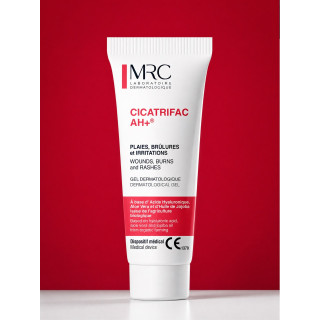
This is where CICATRIFAC AH+ comes in – the dermatological gel from Laboratoire Dermatologique MRC, a Class IIb medical device. It creates an environment conducive to skin repair and protects the area against friction and bacteria. It combines three active ingredients:
- Hyaluronic acid (0.3 per cent): this humectant, capable of retaining up to 1,000 times its weight in water, helps keep the skin supple and limit dehydration.
- Acemannan, a natural polysaccharide found in Aloe Vera gel: it aids tissue repair, helps reduce inflammation and supports collagen production.
- Organically grown jojoba oil: it forms a light film that protects the skin barrier and soothes redness and minor irritations.
When should it be used?
- Irritation and redness, including nappy rash
- Post-treatment care following chemical peels, hair removal and laser treatments
- Superficial injuries: chapped skin, scratches, grazes, scrapes and minor burns
- Superficial cuts and the umbilical cord of a newborn baby
When should it not be used?
Deep wounds, such as surgical wounds, pressure sores and ulcers, are not suitable for treatment with this gel. Nor should it be applied to an infected wound. In these situations, seek advice from your doctor.
How should it be applied?
- Wash your hands
- Clean and disinfect the area
- Apply a thin layer of gel to the affected area twice a day
- For a superficial wound, massage gently until fully absorbed
- Close the tube tightly after use
FAQ: your questions about wound healing
How long does it take for a wound to heal?
The wound will close within a few days to a few weeks, depending on its depth. The scar, however, may take several months to two years to mature.
Why is my scar red and raised?
This is usually normal during the maturation phase. If it thickens, becomes painful or continues to swell, show it to a doctor.
Should a wound be left exposed or covered?
Wounds heal better in a moist environment than when left exposed to the air. However, you should follow your doctor’s instructions, which may vary depending on the procedure carried out.
Can a scar be exposed to the sun?
Not without protection. A sun cream with SPF 50 is recommended for at least a year, as UV rays can cause the scar to darken permanently.
Can CICATRIFAC AH+ be used on a surgical wound?
No, the package leaflet states that surgical wounds are not a suitable indication. The gel is suitable for superficial lesions and for aftercare following peels, laser treatments or hair removal. Ask your doctor for advice.
Share this content